|
|||||||||
|
Share this: |
|
||||||||
|
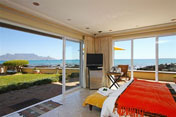
Hello CapeInfo has just upgraded to a “responsive” template which means that the site now caters for wide desktop screens, tablets and mobile phones. There’s going to be some tweaking for the next few weeks as everything is optimised. Some truly amazing places have been added to the directory and we highlight a few in Editor’s pick. Enjoy them! And then we have Two Big Questions at the end. Please let us have your views. Editor's Pick
Some new additions to CapeInfo's Directory
For all the latest additions to the accommodation directory, click here. Big Question #1
What's more important – towns, cities & villages... or regions?
Does anybody know what region London, New York, Paris or Sydney are in? Does anyone care? The same goes for San Tropez, Santorini and Timbuktu. So why – in South Africa – do we make such a big deal of region and route marketing, often with names which are unknown brands? Is it because our destination marketing is dominated by local government politicians and bureaucrats? And they don't appreciate the fundamental imperative of all marketing: "It's not what you want to say, it's what your customer wants to hear." There are examples of strong route and regional brands, but none of them were created by bureaucrats. For example, the Stellenbosch Wine Route – where a group of product owners banded together to reinforce their offering... using and enhancing the strong Stellenbosch brand. And there’s the Garden Route, Swartberg and Waterberg, but those have existed as brands long before any destination marketing came into play. Cities, towns and villages are the ultimate (and very competitive) brands. Anything that dilutes these as brands damages destination marketing. As an example, take the relatively new Whale Coast Route being marketed by Overstrand Municipality. Wouldn’t they get more bang for their buck by rather boosting their already-recognised brands? What’s it going to cost to elevate Whale Coast Route to the same level of regional, national and global recognition as Hermanus and Gansbaai? The bottom line is… Overstrand can’t afford it. To make matters worse, most visitors to this area visit when there isn’t a whale in sight! Is this a brand promise that can't be met for most visitors? As municipalities around South Africa try to up their role in destination marketing, the nonsense grows worse. Municipalities usually embrace several towns and, because each doesn’t want the other to have dominance, new and meaningless brands are being created. Does the West Coast Peninsula mean anything to you? (I bet Paternoster, Langebaan and Saldanha do!) This epitomises bureaucrats’ need for political solutions, aligned to political structures, rather than marketing solutions. In Gauteng it’s particularly confusing since many accommodation establishments in Ekuhuleni (East Rand) still claim to be part of Johannesburg. And in the Eastern Cape, Port Elizabeth and East London mean much more than Nelson Mandela Bay and Buffalo City. Please click here to vote in our poll and tell us what you think. Big Question #2
How can you manage what you can't measure?
Here’s a question mainly for people in the SA tourism industry – which should mean all South Africans! Having visited many tourism offices around SA, one can’t help wondering, “Are they just info offices, or do they actively market to a far wider audience?” Do they match the expectations of paying members? Do they give a return on local government funding or is that just a feel-good grant? So we asked Alan Winde, the Western Cape’s MEC for Finance & Tourism: "Should Local Tourism Ofiices (LTOs) receive municipal funding without proper, annual business & marketing plans?" His answer was "No, they must be able to show plans and report after the year end. It's public money." How many LTOs and municipalities comply with this fully? You may find rudimentary plans submitted, but are they worth the paper they are written on? And how many submit the required annual reports that show what was achieved? It’s not just about accounting for money spent, but showing that it was effectively spent and that it did produce returns, measured year-against-year. Now the real problem lies with the municipalities who provide the annual grants. Are they failing in their duty? Are they competent to assess business and marketing plans, and do they demand the annual reports showing what was achieved? Maybe provincial authorities like Wesgro (for the Western Cape) or independent assessment organisations need to be tasked with endorsing plans and reports – because most municipalities don’t have the expertise. And this could provide the opportunity to raise the bar in destination marketing everywhere. Please click here to take part in our poll and tell us what you think.
capeinfo.com |
|||||||||