Driving into Phalaborwa at about 8am, the first thing that struck me was the haze in the air.  And this was not a heat haze, it was dust from the mines.  Phalaborwa is another one of Limpopo’s towns that today owes its existence to the copper and phosphate mines that surround the town.

The second thing that struck me while I explored the town before my first meeting was the sense of order that’s rare in Limpopo.  It’s clean, architectural eyesores are few (not that there’s any great architecture) and even the informal trading in the town centre was obviously managed.  Was this evidence of a mining company influencing a municipality?

Phalaborwa lays claim to being the tourism capital of Limpopo and its tourism info office, funded and staffed by the Palabora Foundation, is the most efficient — by far — that I’ve come across in Limpopo.  Mark Glanvill and Rosa-Leigh Kruger are real assets to the town.

Phalaborwa’s Marula Festival in February each year is one of the highlights of Limpopo’s events calendar.  Another attraction is the fact that one of Kruger National Park’s gates in only 800 metres from town.  And with the opening of the Giriyondo border post, you can now drive through to Mozambique.

Gate to Kruger National Park on the outskirts of the town

The region’s challenges are considerable.  Ba-Phalaborwa municipality has a population of 156,000 and 18% are unemployed.  Only 41% of the 15-65 age group are economically active.

In the Phalaborwa district (population 111,650), 33% are under the age of 15; 66% under the age of 34; 40% have no income and 20% earn less than R500 a month.  Some 23.5% are HIV-positive.

Malesala

Malesela Letsoalo

My visit starts with Malesela Letsoalo, director of the Palabora Foundation (founded in 1986).  Until 2001, Rio Tinto’s Palabora Mining Company (PMC) contributed 3% of its after tax profit to the Foundation.  But then, someone at Rio Tinto was very clever and had the foresight to plan ahead.  With lean years looming while the company moved from open pit to underground mining, the Foundation received a lump sum grant of R176 million so that it’s work could continue using the interest earned, supplemented by other donors (European Union, Oxfam, Foskor, Sasol Nitro and others).

Of course, given that PMC made a profit of R1.4 billion last year, it’s obvious to ask if they got off lightly.  Not really.  The Palabora Foundation would have gone unfunded for a few years if the 3% formula had been retained.  It meant they could plan ahead and attract a broader donor/participant base.  And that’s not the last donation PMC will make.  Discussions on the mine’s ultimate closure have already started and that will also carry a significant lump sum payment to the community.

Now that’s all good and well, but what’s the money doing?  So many foundations thrive on doing “good work” but the results are hardly lasting.  The Palabora Foundation focuses on education, combatting the impact of HIV/Aids and entrepreneurship.

Opportunity to excel

Opportunity to excel

Educational results can only be regarded as spectacular.  The grade 12 pass rate is over 90% with over 75% gaining university exemption — far higher than the Limpopo average.   The focus is on mathematics, science and technology.  A special programme selects students with high-achieving potential, offering extra tuition which leads to bursaries, usually to study engineering.

Programmes start with early learning and extend to school learners, teachers and governing bodies for about 50 schools in the region.

Cooking classes in a state-of-the-art kitchen at the Palabora Foundation

I was singularly impressed by everything the Palabora Foundation is doing — courses in construction, computer-literacy, sewing, arts and crafts.  And those attending are not just school-leavers or others needing to improve their skills.  Mine employees close to retirement are also encouraged to attend so they have skills to occupy them productively when they leave the mines.

Mark Glanvill & Matee Seduma

Mark Glanvill & Matee Seduma

Later that afternoon back at Bollanoto Tourism Centre, I met with tourism’s Mark Glanvill, Chris Kruger (Palabora Foundation and chair of the Trade & Tourism Council) and Matee Seduma  (head of the municipality’s local economic development).  If the Foundation has been the catalyst, Seduma is rising to the challenge, and that’s why this former schoolteacher left the profession.  There’s a vibrant and informed dialogue about driving tourism but, Seduma notes, when he asked Limpopo Tourism for their business plan, he was told there isn’t one (except in someone’s head).

Rio Tinto has changed my attitude to mining companies.  As a Capetonian, appreciating how God-given assets and nurtured agricultural environments have created one of the world’s great destinations and SA’s best city, mines are an anathema.  They rape and despoil the land and the benefits they offer are temporary.  Or are they?  What Rio Tinto is doing suggests not.  It has shifted the focus of the whole region.  The Ba-Phalaborwa municipality has set its sights firmly on a tourism and wildlife focus, and the importance of entrepenurship.

Something else unique to a mining company has permeated the town.  Mines are safety conscious and cleanliness is part of the safety ethic.  Phalaborwa reflects this (unlike some other Limpopo towns where mines play a lesser role in their communities).  Mines also practice strict financial controls – and that’s probably why the Palabora Foundation really does give more bang for the buck in a province renowned for corruption and lax financial management.

And there’s a lesson for the ANC Youth League’s Julius Malema — the private sector always gets more bang for the buck than the government ever can.  And yes, there is sometimes an attractive face to capitalism.

Read more about Phalaborwa here.

Posted in Limpopo, Places, Route 71 | Tagged , , , , , , , , | 2 Comments

I went for my first game drive in a golf cart… on Phalaborwa’s Hans Merensky Estate… and saw giraffe for the first time as well as hippopotamus, crocodile, warthogs and impala in a matter of about 10 minutes on a golf course.  Surely that says it all… where else in the world can you do that?

I’ve been longing to see a real giraffe since I arrived in Limpopo — more than lions or anything else — and I wasn’t disappointed.  I was taken around by Mark Glanvill and no sooner had we come across a group of buck right in front of one of the houses on this spectacular golf estate…

Impala on Hans Merensky Estate

My First Giraffe... they are impressive and one can forget that they are wild animals.

… than we came across the first group of giraffe. It really was a matter of just turning my head to the right!

Hans Merensky Estate is to Phalaborwa what the V&A Waterfront is to Cape Town, but in some respects it is even more impressive because of its uniqueness. It started as facility for Palabora Mining’s staff but was sold because was not a core function of the company. The buyer turned it into a golf estate with a hotel and ±80 houses. A new investor is currently upgrading the whole facility. Their slogan is the apt “Golf in the Wild”.

So if you’re easily distracted while putting, this is not for you.

There was game everywhere.  It was a spectacular drive around a golf course.

The Estate borders the Kruger Pational Park and there is a gate which is opened at night.  Tracks in the morning show that lions do come through.

Giraffe amused by the flag on the green that springs back, warthog, and thanks goodness for a telephoto lens with this big croc!

The only sour taste was being chased off the Estate by an officious manager who demanded the film from my Sony digital camera after trying to drag me into his argument with Mark! He claimed to have worked at Ferryman’s Tavern at the V&A Waterfront, but obviously learnt nothing about the importance of tourism.

Posted in Limpopo, Places, Route 71 | Tagged , , | Leave a comment

I’ve learnt something interesting in Limpopo.  Most accommodation establishments in this province aren’t really part of tourism at all — in fact, about 70% of all bednights spent in the province have very little to do with tourism.

I define tourists as discretionary spenders — they have a choice and decide where they want to go.  They are attracted by environments, leisure options, shopping, a stimulating place for meetings, etc.  They have a choice.

Now that 70% certainly doesn’t service a tourist market as defined by discretionary spenders — they have a captive market that mainly services the mines and other industries in their towns.  They cater for the commercial travellers that have to visit a certain town.

So why is this important?  These establishments don’t need to participate in destination marketing, they just need to make their products known and a good relationship with the mines or whatever is usually sufficient.  They don’t demand quality, stimulating and competitive environments because all they sell is shelter — a bed for the night rather than a compelling place to visit.

Now this has a big impact on destination marketing and is one of the reasons that Limpopo is so badly marketed — 70% of the product owners have different needs.  This also shows in the priority which municipalities give to tourism and destination marketing.  It shows in the attention given in major towns to quality environments conducive to tourism.

Two exceptions I’ve come across on Mopani’s Route 71 are neighbouring Tzaneen and Phalaborwa, where there seems to be a battle going on for South Africa’s national Cleanest Town of the Year Award.  They are trying, but are they taking it far enough?

Probably not but then tourism product owners who are part of the destination marketing effort haven’t banded together sufficiently, investing in destination marketing and demanding that their local municipalities do the same.  Businesses that participate in their local destination marketing should be recognised, and Limpopo Tourism should accredit effective local tourist offices’s and encourage them with funding.

Limpopo Tourism should not be running the local Tzaneen Info office!  It is the local municipality’s legislated function and this only encourages them to abrogate their responsibility.

What’s the most important difference between commercial travellers and real tourists?  Real tourists spend more money and, if the enjoy their stay, they come back to invest in the area. They invest in property and businesses, but frequently they are also moved to help improve local communities.

Limpopo Provincial Government and Limpopo Tourism & Parks have provided little discernable leadership to date.  There is no tourism legislation as exists in the Western Cape.  There is no tourism business plan except for what’s in someone’s head (more on this in another post).  It’s mind boggling that taxpayers funds can be allocated in the absence of an approved business plan!

If I sound harsh on Limpopo Tourism, there appears to be some light.  I met Morris Mabada (their new regional manager for Mopani) briefly yesterday.  He impressed me!

Posted in Limpopo, Travels | Tagged , , , , | Leave a comment

Bruce Barritt, MD of First Car Rental says it's people that make the difference

IN A WORLD where global brands rule, there is a South African car rental company that is taking a wholly South African brand onto the world market.  And its commitment to people – which is all that really differentiates one car rental company from another – is so great, that there was an in-house joke when they started that they had more staff than cars!

I met up with Bruce Barritt, MD of First Car Rental, at Indaba in Durban.  First Car Rental is a subsidiary of Combined Motor Holdings (CMH Ltd) which is listed on the Johannesburg Stock Exchange.

While First Car Rental is a relative newcomer in comparison to their competition (having opened its doors in 1999 as the National & Alamo brands), Bruce Barritt has a 30-year track record in the car rental industry.  Bruce Barritt ran the National Alamo franchise in SA for nine years – winning numerous awards as the best global franchise – until the National Alamo EMEA brands were sold to Europcar… South Africa was really a by-product of an International transaction – without much consideration & after First Car Rental (then National Alamo South Africa) paid R180 million in royalties.

But they had their own systems and a very loyal client base so the change to First Car Rental was smooth and their growth since then has been rapid.

His first passion in the company are the people because that’s what sets the company apart.  “We have very committed people at First  Car Rental – they are the lifeblood of the business.  This is a people business,” he says.  He expects everybody within his compliment of staff to make the customer’s experience hassle-free and memorable.

He is also committed to having the most user-friendly systems in the industry and their online systems are very, very good.  They have been innovative, introducing a number of firsts in the local industry.  The vision of wanting to move to a process where bar-coded vehicles and contracts replace the paper trail is more than 50% there, giving staff more time to interact with and get to know their customers.  His biggest nightmare is losing the personal touch and not having direct and immediate contact with all FCR’s customers.  “If something goes wrong, I want to pick up the phone and fix it,” he says.

The in-house joke about more staff than cars started when they rolled out their very impressive national footprint.  You can rent a First Car Rental vehicle almost anywhere in SA.

The move to roll out the First Car Rental brand started in Mauritius and was followed by a former National Alamo franchisee in Malta who needed to be part of a international brand to keep his airport slot.  A few other international franchisees are under consideration at the moment.

Increasing the revenue stream is less important than the marketing footprint of a global brand and it’s with some pride that Bruce says that this is the first time a South African car rental brand has gone international.

First Car Rental also has a servicing agreement with Sixt Rent a Car which is very strong in Germany and also has a presence throughout Europe, South America and the Asia-Pacific region.

They have just launched Direct Transfer, a chauffered service that picks you up and takes you from A to B.  Click the link to check it out.

When CapeInfo started looking for a marketing partner and sponsor for Travels with Akela, FCR stood out  as the most responsive, friendly and innovative.  They are a delight to work with.

Click here to rent your next vehicle.

Posted in People, Travels | Tagged , , , , | Leave a comment

I haven’t been a regular visitor to Indaba for several years so this year I saw it with new eyes.  Yes, it’s grown and yes, most of the products are spell-binding.  It’s a marketers’ dream because I doubt that any other destination in the world can offer as much variety… coupled to unsurpassed professionalism in so many cases.

SA Tourism have also matured and their side of the organisation has become very slick. (The only exception was, on responding to an invitation to interview CEO Didi Moyle, Monde Mateza never responded to my request.)

At the start of this blog I said that I’m a typical Capetonian who believes that the Western Cape is more blessed than almost anywhere else on earth. Well, I still believe that to a certain extent, but my travels have shown me people, products and places that really do excite me. More than ever, I realise that Southern Africa as a whole has the potential to beat all other regional destinations… if we just change some mindsets.

So, after three months away from home, it was with no lack of eagerness that I set off to find the Cape Town and Western Cape area at Indaba first. It took some effort because the organisers had signposted the direction incorrectly. And then, at the tail-end of the whole Indaba complex, I found an anonymous tent.

Cape Town & Western Cape's No-Name Brand - the entrance to the Western Cape's pavilion

For South Africa’s leading city brand to be presented in this way was just not good enough; I was astounded. I was embarrassed as a Capetonian.

Was I being over-critical? I spoke to Cape Town Tourism’s Mariette du Toit-Helmbold and learned that the usual tent had been commandeered for Jacob Zuma’s coronation and their banner couldn’t be accommodated in the new tent. I greeted CTRU’s Dave Fransen (responsible for the Western Cape pavilion) several times but he seemed to make a point of avoiding me.

I spoke to Peter Bacon, CTRU’s chair, and he agreed that it was unacceptable and needed a serious rethink.

I spoke to Nils Heckscher, MD of Winchester Mansions Hotel and CTT board member, who always shoots from the cuff. He agreed it wasn’t as good as it should be and said that maybe the Province was resting on its laurels. He added that things will be different next year with the new alignment of provincial and city politics.

I spoke to Rema from Fedhasa Cape, based in the main ICC at Fedhasa Natal’s stand. She felt that the Western Cape area lacked its usual vibe and buzz: “and it reinforces the typical view of Cape Town… that we want to be apart from the rest.”

I bumped into an old friend, Di Campbell (now Dagh), as we looked at the CTT stand. “Is that Cape Town Tourism?” she asked incredulously, “I thought it was Cape Point Routes!” Great for Cape Point Routes, bad Cape Town branding.

Free State's position was centrestage and their external branding was excellent.

Mpmalanga's stand in the Durban Exhibition Centre displayed pure branding professionalism.

Cape Town Tourism's area... come on guys, you can do much better.

The vast empty spaces in the Western Cape tent just emphasized a feeling that it was not as well attended as other destinations.

CTRU will say they had a large banner at the one end of the tent (see right hand side).  Yes, and it was a stunning photograph of an unusual view of Table Mountain and the 12 Apostles.  But to anyone not familiar with the mountain, it's almost meaningless.  To use it for branding is just muddled.

The promise of the Free State pavilion outside wasn’t carried through inside, where strong brands (like Clarens) fought with geo-political districts.  And what on earth was the Limpopo Treasury doing with a stand at Indaba?  Now that’s an example of misguided efforts (and budgets)!

While I am seeking out the best of the best in people and products during these Travels, what interests me most are destinations and destination brands, and it’s here that the SA tourism product doesn’t fare well at all.

World Travel Awards
A highlight at Indaba was the presentation for the World Travel Awards. We publish the list for Africa and South Africa in full.

Africa’s Leading…
Airline South African Airways
Airport Tambo International Airport, South Africa
Boutique Hotel Saxon Boutique Hotel & Spa, South Africa
Boutique Hotel Brand Mantis Collection
Budget/Low Cost Carrier 1time
Business Car Rental Co. Avis
Business Hotel Sandton Sun
Business Travel Agency Travel with Flair
Car Hire Europcar
Casino Resort The Palace of the Lost City, South Africa
City Tourist Board Johannesburg Tourism Company
Conference Centre International Convention Centre Durban, South Africa
Conference Hotel Kempinski Hotel Djibouti
Conservation Company Shamwari Game Reserve, South Africa
Cruise Line Silversea Cruises
Destination Cape Town
Family Resort Sun City Resort, South Africa
Game Reserve Brand Mantis Collection
Golf Resort Fancourt Hotel & Country Club, South Africa
Green Hotel Nairobi Serena Hotel, Kenya
Hotel Mount Nelson Hotel, South Africa
Hotel Brand Starwood Hotels
Luxury Hotel Arabella Western Cape Hotel & Spa
Luxury Lodge Thanda Private Game Reserve, South Africa
Luxury Train The Blue Train
Marketing Campaign South Africa Tourism, It’s Possible
Port Cape Town (Port)
Resort Sun City Resort, South Africa
Responsible Tourism Co. Nkwichi Lodge
Safari Lodge Shamwari Game Reserve
Spa Resort Fordoun Spa, Hotel & Restaurant, South Africa
Sports Resort Zimbali Lodge & Country Club – South Africa
Suite Nelson Mandela Platinum Suite, Saxon Boutique Hotel & Spa
Tourism Dev. Project Legend Golf & Safari Resort
Tourist Board South Africa Tourism
Town House Hotel Shamwari Town House
Travel Agency Club Travel, South Africa
Travel Exhibition INDABA
Travel Management Co. Travel with Flair South Africa
Villa Queen Cleopatra Villa, Savoy Sharm El Sheikh, Egypt
South Africa’s Leading…
Beach Hotel The Long Beach, Cape Town
Boutique Hotel Saxon Boutique Hotel & Spa
Business Hotel Sandton Sun
Game Reserve Brand Mantis Collection
Golf Resort Fancourt Hotel & Country Club
Hotel Mount Nelson Hotel
Resort Sun City Resort
Spa Resort Fordoun Spa, Hotel & Restaurant
Travel Management Co. Travel with Flair
Villa Ellerman Villa

For some, Indaba is a chance to get out of the office and party; for some it’s a rare opportunity for networking or checking out the opposition; and for some — like Horst Frehse and Rick Taylor who I repeatedly tried to say hello to — it’s a time to really work hard!

Posted in Travels | Tagged , , , , , , , , , , , , , , , , , , , , | 1 Comment

We decided to stay in Pietermaritzburg for Indaba rather than stay in the bustle of Durban.  A wolf likes quiet.  We didn’t regret it for a moment.

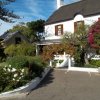
We stayed at The Jays in the leafy suburb of Clarendon — an establishment favoured by business travellers — that offers bed & breakfast or self-catering.

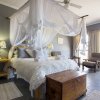
John & Jane Kassner were perfect hosts, knowledgeable about the area with advice on where to go.  The room was very comfortable and the last time I slept in a bed this comfortable was at the Cape Grace Hotel in Cape Town!

Akela loved the walks (and smells) of the very pretty streets in Clarendon.  Streets are immaculate and sidewalks manicured.  The one morning we encountered a whole group of monkeys who gathered in the tree above us, chattering away.  Did they realise Akela is a wolf?  I don’t know but Cape Town’s baboons certainly do and treat her very differently to dogs.

caption goes here

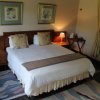
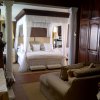
A very comfortable bedroom with one of the most comfortable beds I've slept in for a long time.

The City Hall, constructed in 1893, destroyed by fire in 1895, rebuilt in 1901. This magnificent example of Victorian architecture is the largest red-brick building in the Southern Hemisphere.

Pietermaritzburg is a fascinating city, especially for anyone with an interest in architecture. Founded in 1838, it’s the capital of KwaZulu-Natal and is a major producer of aluminium as well as timber and dairy products. Sadly, while the suburbs are still delightful places, the CBD needs to take lessons from the Cape Town Partnership on city management and rejuvenation.

Pietermaritzburg’s tourist office needs a kick in the bum and seems to be a total waste of rate- and taxpayers’ money, if funded by local government.  We emailed asking for information but have yet to receive any reply.

Posted in Accommodation, KwaZulu-Natal, Places | Tagged , , , | Leave a comment

MOST PEOPLE from the Western Cape probably find toll roads an anathema.  We only have two throughout the whole province — the Huguenot Tunnel and Chapman’s Peak Drive, and one can understand why both are toll roads (although one wonders how long Chapman’s Peak will remain one, given that it’s been such a disaster).  For the rest, travellers (and tourists) don’t pay tolls to get from A to B.

So I decided to take an old-fashioned (and free) National Road from Mokopane to Pietermaritzburg — the N11.  (The thought of all the traffic around Pretoria for Jacob Zuma’s coronation also discouraged passing through Pretoria.)

The trip started early, in the dark, and it was long after crossing the N1 near Marble Hall (in Mpumalanga Province) that I was already cursing the SA National Roads Agency.  At the first of many stop-go sections, traffic was allowed from both directions onto the single lane — rather frightening, not to mention dangerous, on a road under construction in the dark!

One must wonder why such long sections of road have to be single lane (with little construction work in sight) because it just increases the waiting time at either end.  This alone, with the slow single lane sections, probably added two hours to our total trip time.

Driving past Groblersdal reminded me that the late Hendrik Schoeman, a minister of transport in the 1980′s, had been one of SA’s most successful farmers and farmed around there.  Harold Gorvy, a prominent businessman, and I first met him (and tourism minister, John Wiley) in 1985 after the Pierhead Festival which had demonstrated the public attraction of Cape Town’s derelict docklands.  Both agreed to form an inter-departmental commitee to report on redevelopment of the area.  That committee was headed by Arie Burggraaf and led to the V&A Waterfront!

It’s a fascinating area and, like Tzaneen which I visited a few weeks ago, is one of the few areas in Limpopo I’ve visited that is extensively cultivated.  Most of the towns impressed for their cleanliness and more sense of order than I’d seen in Limpopo — Grobersdal and Middelburg stand out in this respect.

What has really become evident in these travels is the importance of municipalities in making or breaking tourism.  Unfortunately, few have a clue… if they are not one of the 95-or-so local authorities that are technically bankrupt!

Here at the entrance to Mpumalanga, the contrast between cultivated areas and typical bushveld is more apparent. The next surprise was coming across the Loskop Dam.

Loskop Dam is located in a really stunning area, and there are a number of resorts that capitalise on this.

If I think of tourism/leisure developments along the Western Cape’s Garden Route and West Coast, I’m sure it won’t be long before the Loskop Dam area sees a mini-boom.  One hopes that effective environmental and aesthetic controls will be in place before it begins.

Middelburg

Driving south-east from Middelburg, the topography is characterised by more rolling hills and valleys; one has entered the Mpumalanga and KwaZulu-Natal grasslands.

This is part of the South African Grassland Biome, now unique among the grasslands that once used to cover nearly 50% of Africa’s surface. A change in climate around three million years ago allowed trees to encroach into these grasslands and create the savannas we know today.

I couldn’t help wondering what economic benefit the area held — it’s sparsely populated apart from occasional sheep.  Well, montane grasslands and fynbos are effective “collectors” of rain water. The southern montane grasslands of Mpumalanga provide year-round water supply essential for the cooling of power stations.

One out-of-date statistic I came across says that the eight Eskom power stations in Mpumalanga supply 70% of SA’s energy needs.  Over 2,000 km² of the Mpumalanga Highveld is taken up by South Africa’s major gold and coal deposits, much of which are mined in opencast pits.

I must find out about environmental legislation governing the mining companies (and maybe someone can answer it in the comments).  The waste heaps are a blot on the landscape.  The heavy-vehicle traffic on the road also made me think back to the 1980′s, when it was very difficult to get road-haulage licences to favour SA Railways.  Maligned as it was then, it reduced the number of trucks on the roads and the damage they do to road surfaces.  Companies should be forced to use rail transport more often!

Grasslands... and very few people!

Outside Volksrust, the last town in Mpumalanga before entering KwaZulu-Natal, a signpost points to Majuba, immortalised on 27 February 1881 as the main battle of the First Boer War where the Boers crushed the British. Over 280 Britons were killed, captured or wounded against Boer casualties of one dead and five wounded.

The battle is historically significant because it led to the signing of a peace treaty and the Pretoria Convention, between the British and the newly created South African Republic, ending the First Boer War.

The Boers’ fire and move tactic employed by the Boers in the final assault on Majuba Hill was years ahead of its time.

Following defeats at Laing’s Nek and Schuinshoogte, Majuba ratified the strength of the Boers in the minds of the British. “Remember Majuba” became a rallying cry in the second Anglo-Boer War.

caption goes here

The N11 ends just past Ladysmith where it joins the N3 which links Gauteng to Durban.  Here we joined a toll road for the first time and, yes, it was a pleasant experience!  Wide roads, a dual carriageway with a wide median and spectacular scenery through the Natal Midlands.  But when the upgrading of the N11 is finished, there is little doubt that it will become the route of choice from the north.  It will be a splendid drive through memorable scenery.

Posted in KwaZulu-Natal, Mpumalanga, Places, Travels | Tagged , , , , , | Leave a comment